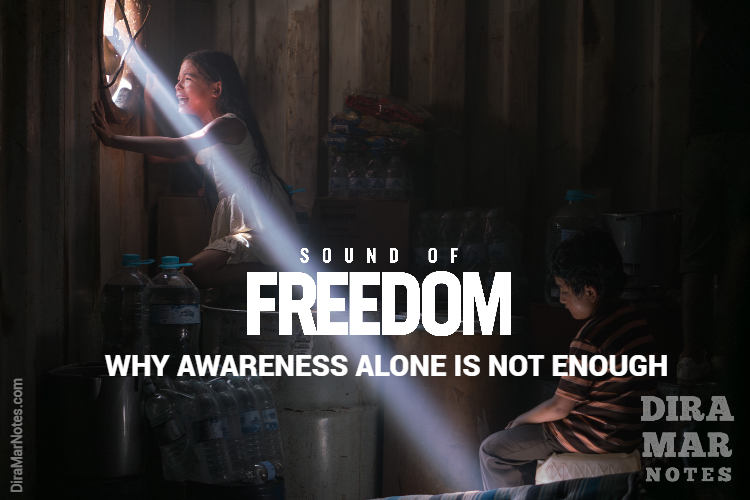
SOUND OF FREEDOM: WHY AWARENESS ALONE IS NOT ENOUGH
Sound of Freedom is a 2023 thriller-drama inspired by the real-life story of Tim Ballard, a former U.S. government agent who left his job to dedicate himself to rescuing children from sex trafficking networks.
The film follows Ballard (portrayed by Jim Caviezel) on a harrowing journey as he risks everything to save victims of child exploitation in Central and South America. Gritty, emotional, and unsettling, the film doesn’t shy away from the dark realities of human trafficking, nor from the emotional cost borne by those who fight it.
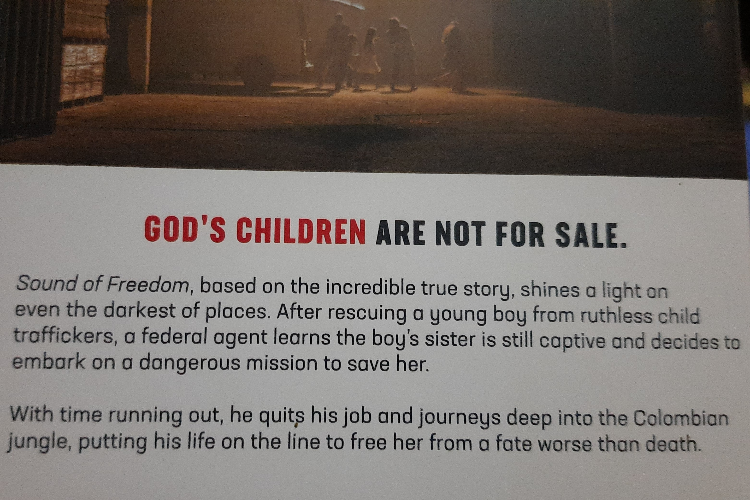
GOD’S CHILDREN ARE NOT FOR SALE
The film’s central message—“God’s children are not for sale”—rings throughout its narrative like a call to action. It frames the issue not just as a legal or social crisis, but as a deeply moral and spiritual one. The line isn’t just a tagline; it serves as a reminder of the sacredness of every child’s life and the horror of reducing that life to a commodity. This theme elevates the story beyond a typical rescue mission, inviting audiences to reflect on the deeper values that should unite humanity in the face of such evil.
THE CONTROVERSIES
Even before Sound of Freedom premiered, it became a lightning rod for controversy. Some media outlets criticized the film, labeling it as conspiratorial or aligning it with far-right political narratives due to the involvement of its lead actor and the real-life figure it portrays. As a result, the film’s intended message, raising awareness about child trafficking, was often overshadowed by politicized debates. Critics questioned its motives, while supporters accused the media of attempting to discredit a film that exposes uncomfortable truths.
Regardless of where one stands politically, the backlash highlights how deeply polarized the discourse around child protection has become, even when the issue itself should be universally condemned.
While Sound of Freedom is based on a true story, it’s important to remember that it is not a documentary; it’s a dramatized film. There’s a growing tendency to blur the line between fact and fiction in entertainment, but Sound of Freedom was never meant to be a minute-by-minute retelling of real events.
Like many “based on true events” films, it uses creative license to shape the narrative, streamline the pacing, and heighten emotional impact. Expecting it to reflect every detail exactly as it happened misses the point of its format. That’s what documentaries or biographies are for, where accuracy is prioritized over storytelling structure in theory. The purpose of a dramatized film like this is to raise awareness, evoke empathy, and spark conversation, not to serve as a historical record.
A TAINTED LEGACY: THE MAN BEHIND THE STORY
Another layer of complexity surrounding Sound of Freedom comes from the controversies involving Tim Ballard, the man whose work inspired the film. After its release, serious allegations surfaced about Ballard’s conduct, casting a shadow over his reputation and prompting many to reassess how they view both the man and the movie.
While these revelations undeniably complicate the film’s legacy, they do not diminish the urgency or importance of its core message: the ongoing global crisis of child trafficking. This situation raises a difficult but necessary question: Can the value of a film’s message stand apart from the flaws or missteps of the real-life figure it’s based on?
Part of the problem may lie in Ballard’s visible presence during the promotional tour. Unlike most films, where the real-life subject usually remains in the background, Ballard often appeared alongside the actors and celebrities, giving the impression that the movie was more documentary than dramatization, in my opinion.
This created a sense of realism that wasn’t entirely reflected on screen and blurred the line between fiction and fact. His visibility also gave him a platform to promote his ventures, which some critics believe further tainted the film’s image.
Still, the message at the heart of Sound of Freedom—that “God’s children are not for sale”—is a powerful one that should not be ignored. Sadly, it often feels like it has been. Despite the conversations sparked by the movie, real-world issues like grooming gangs in the UK and the disturbing number of children who went missing at the U.S. border after the film’s release remind us how far we are from solving the problem. The film may have brought awareness, but the fight is far from over.
THE FRUSTRATION AFTER WATCHING
Perhaps the most challenging part of watching Sound of Freedom isn’t the disturbing content, it’s what comes after. The film ends, but the problem doesn’t. For many viewers, the emotional impact sparks an immediate question: What can I do to help? That urgency is often met with frustration, especially in places like the U.K., where child exploitation, child abuse, and grooming gangs remain persistent and largely unresolved issues.
While the movie is successful in raising awareness, which I also supported with “Sound of Freedom: Fight for the light, silence the darkness”, awareness alone is not enough. The reality on the ground is much more complicated. Governments are still slow to prosecute perpetrators. Many survivors lack access to support services, and systemic failures, ranging from bureaucratic inertia to outright corruption, continue to allow abuse to flourish.

Viewers walk away emotional and motivated, but with no clear path forward. The film encourages raising awareness, but after some time, this suggestion can feel vague and insufficient. Many people turned to high-profile foundations and organizations, only to find they don’t operate in their region, or worse, that their effectiveness is questionable. In some cases, concerns over mismanagement and corruption in NGOs make people skeptical about offering financial support at all.
What’s missing is practical, localized guidance. Instead of only spotlighting broad awareness campaigns, the filmmakers could have done more to direct audiences toward vetted, trustworthy, and local anti-trafficking organizations. Even small actions, supporting regional shelters, volunteering with child welfare programs, or lobbying for policy changes, can have a meaningful impact. But without direction, the initial wave of emotion risks fizzling out into helplessness.
The message of Sound of Freedom is powerful and deeply important. It awakens something in viewers, but without clear next steps, that awakening can turn into frustration. The darkness the film exposes is real, and it persists long after the credits roll. If we want to be part of the solution, we must go beyond awareness and push for meaningful, informed action, where we are, with what we have, right now.
CHILD TRAFFICKING AND ABUSE: A CRISIS THAT DEMANDS MORE THAN AWARENESS
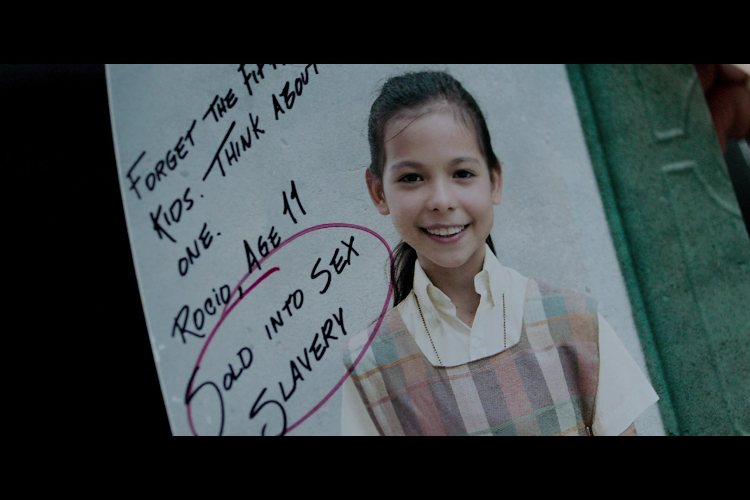
Child trafficking remains an open secret. It is an ongoing devastating crisis in every corner of the world, including the Americas and the Caribbean. It takes many forms, but its outcomes are tragically consistent: children are robbed of their innocence, safety, and future. Whether it’s for forced labor, sexual exploitation, or child pornography, the consequences are horrific, long-lasting, and in many cases, irreversible. People still have issues talking about it, so it’s still hush-hush.
What’s even more disturbing is how normalized some of the behaviors and conditions that enable trafficking have become. Cultural silence, weak legal systems, and a lack of accountability allow traffickers to thrive in the shadows. Every action, no matter how seemingly small, that enables or excuses the exploitation of children should be publicly condemned and legally punished. There is no acceptable excuse. There is no moral gray area. It should be zero tolerance.
Despite the gravity of these crimes, many offenders in Western countries often receive shockingly light sentences, sometimes just months or a few short years in prison. Others with resources and influence in corrupt justice systems are even declared innocent. This sends a dangerous message: that the lives and dignity of children can be violated without facing serious consequences. It also re-traumatizes victims, who rarely see true justice served.
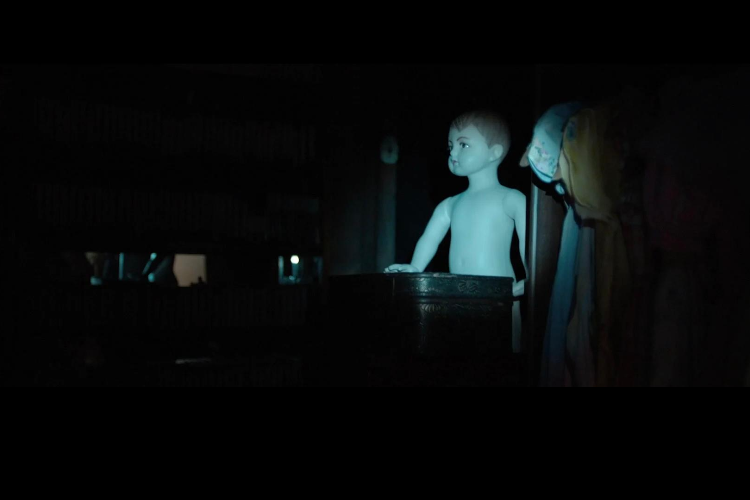
There was a time when the justice system was designed not only to punish but to deter. People feared breaking the law because the consequences were swift and serious. Today, that deterrent effect has weakened, partly because the very people tasked with upholding justice often lack integrity. Corruption, incompetence, and political agendas continue to undermine efforts to protect the vulnerable.
In the Americas and the Caribbean, where child trafficking is particularly rampant, the situation is worsened by inconsistent enforcement, underfunded child protection services, and widespread governmental corruption. Laws may exist on paper, but without honest lawmakers and dedicated law enforcement officials to carry them out, they are powerless.
We must demand more, not just from our governments, but from ourselves as citizens. We must insist on justice systems that truly serve justice. We must amplify the voices of survivors, push for meaningful sentencing reform, and support efforts to root out corruption at every level. Because protecting children is not a political stance, it is a moral obligation.
HOW TO WATCH
The film can be watched on the Angel Studios website, but you have to become a guild member, and unfortunately, the memberships are not yet globally available, except for the U.S, I think. In any case, I got the simple DVD during a sale campaign, which is now available along with a Blu-ray edition to purchase on the Angel Studios Web Shop.

The film’s running time is 131 minutes, and it carries a PG-13 rating. Region Code is NTSC, all regions. The film can be watched in English and Spanish (LATAM, with subtitles in English and Spanish (LATAM). The DVD also contains Angel Studios originals trailers, including Cabrini, The Shift, The Wingfeather Saga, Tuttle Twins, and The Chosen.

There is also a special collector’s Steelbook case with 4K Ultra HD and Blu-ray discs for premium viewing, with the following exclusive bonus featuring the Making Sound of Freedom, Rescuing a Blockbuster, Walking the Red Carpet, Behind the Scenes, Film Impact, Writer & Director Commentary, Producer Commentary, Behind the Scenes Photo Slide Show, and Trailers. This edition’s content is in English, Spanish (LATAM), and Portuguese, with subtitles in English, Spanish (LATAM), and Portuguese.
FINAL THOUGHTS
Sound of Freedom is far from a flawless film, but its imperfections don’t dilute its urgency or emotional weight. At its core, this is a movie that dares to tackle one of the darkest and most difficult subjects of our time: the global crisis of child trafficking. It does so with a sense of purpose, not just to entertain, but to provoke awareness and stir moral discomfort.
Yes, the film has faced criticism, whether over its creative liberties, the public behavior of those involved, or the controversies surrounding the real-life figure it was inspired by. These aspects have complicated the film’s legacy. And yet, none of them erase the importance of the story it seeks to tell. If anything, the surrounding noise reminds us of how tangled and uncomfortable the truth can be.
What Sound of Freedom succeeds at, more than anything, is starting a conversation that many would prefer to avoid. It challenges viewers to look beyond headlines, to sit with the horror of what is happening to children around the world, and to ask hard questions: What can be done? Who is being held accountable? What role do I play?
The film doesn’t offer easy solutions, and in truth, no single film could. But it does something vital: it pulls this issue out of the shadows and places it in front of a global audience. That visibility matters.
This is not just a movie to watch and move on from. It’s a mirror and a call to action. It asks us to reflect on the systems that allow such crimes to persist, to use our voices in whatever capacity we have, and to support efforts, whether local or global, that work to protect children from exploitation.
Ultimately, Sound of Freedom reminds us that storytelling, even when flawed, can be a powerful tool for justice. But real change will only come when that awareness transforms into sustained action, accountability, and collective courage.
Because in the end, as the film powerfully reminds us, no matter your faith or beliefs, one truth stands above all: God’s children are not for sale.
All images in this publication belong to the original creators and are used as references under fair use.
My notes are all set. Let me know what you think.
See you on the next page!